
Most online shopping scams work in one of two ways. They get you to pay in a way that is hard to undo, or they move you away from the safe place where the deal started. So pay by card or through a marketplace's own protected payment, and be wary of any price that looks too good to be true.
How do fake online shops work?
A fake shop looks like a normal web shop. It has photos, a basket and a checkout. The difference is that nothing ever arrives, or something cheap and wrong turns up. Sometimes the shop exists only to collect your card details.
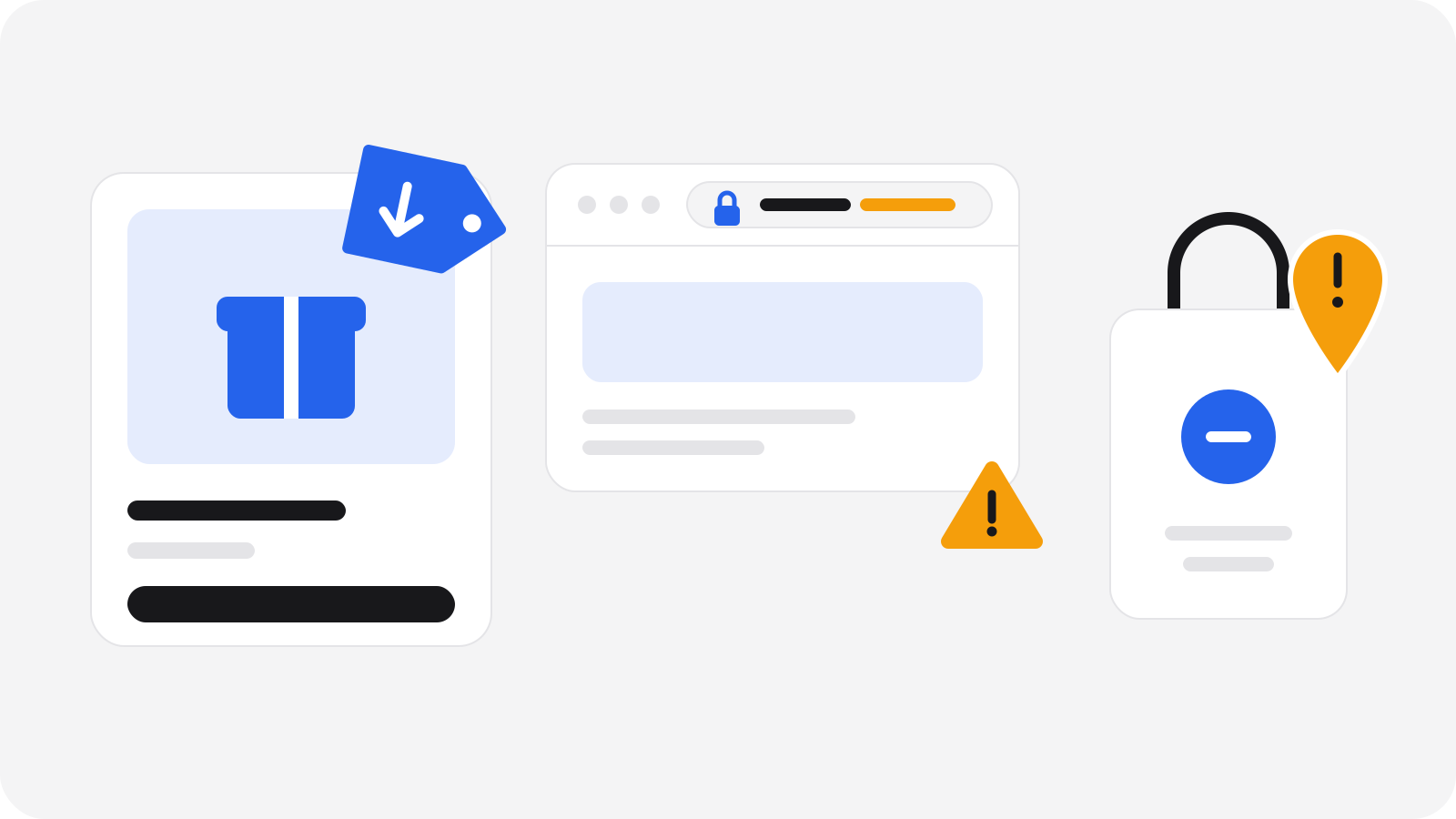
The bait is almost always a price. A brand-name item at a fraction of what everyone else charges, a "closing down sale" that never ends, or a countdown timer that pushes you to decide now. These shops often appear in social media ads and vanish after a few weeks.
A padlock in the address bar does not make a shop honest. It only means the connection is encrypted. Scammers can get one too.
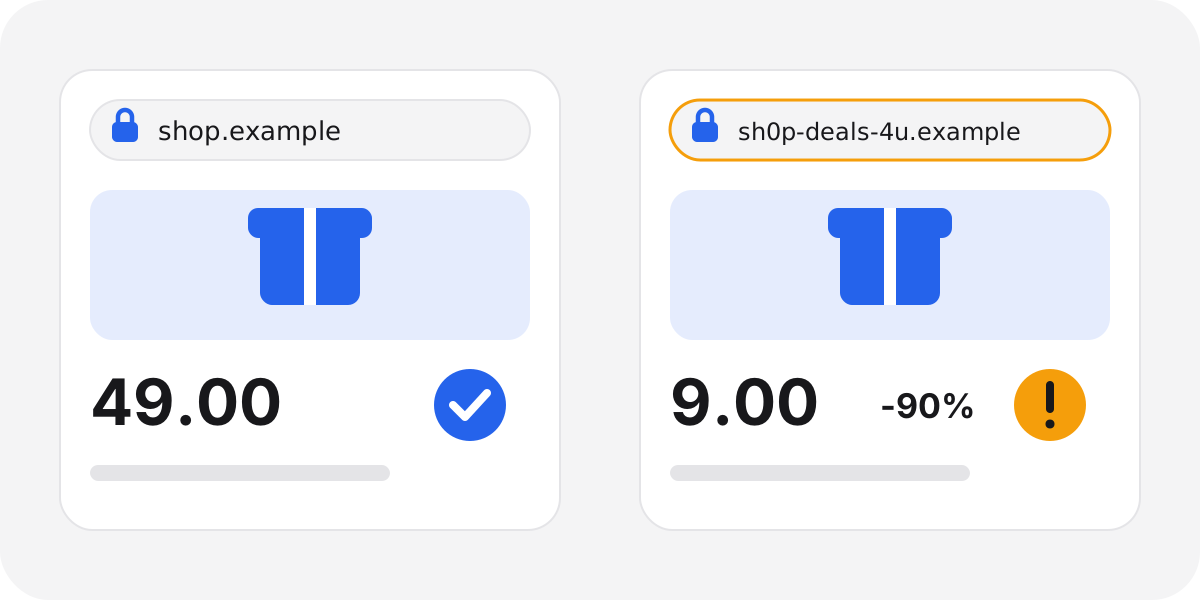
How can you tell if a web shop is fake?
No single sign proves it, but several together tell you a lot. Here is a quick comparison.
| A shop you can probably trust | A shop to be careful with | |
|---|---|---|
| Price | In line with other shops | Far below everywhere else |
| Address | The name you expected | Look-alike, extra words, odd spelling |
| Company details | Real name, postal address, clear return terms | Only a contact form, or copied text |
| Reviews | Mixed, specific, spread over time | Only glowing, vague, all worded alike |
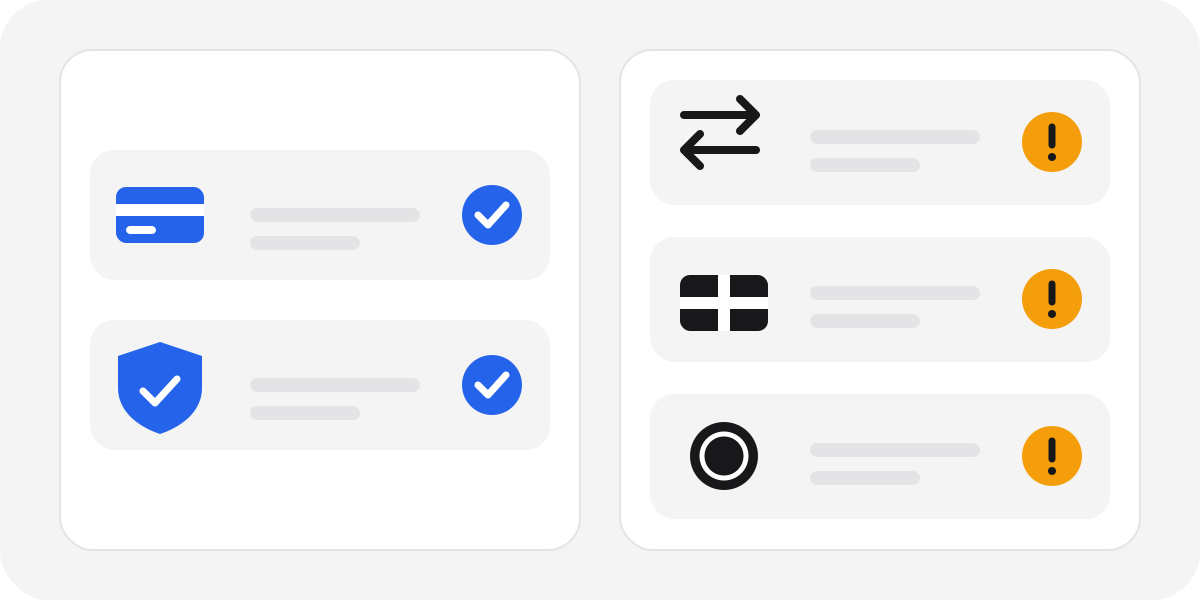
| Payment options | Card and familiar checkout | Pushes bank transfer, gift cards or crypto |
| Tone | Calm | "Only 2 left", "pay within 10 minutes" |
If you are unsure, search for the shop's name together with the word "scam" or "reviews". Look on independent sites, not on the shop's own page. A shop with no history at all, selling things that are normally expensive, deserves a pause.
What are the common marketplace payment tricks?
Buying and selling second-hand is mostly fine. The tricks tend to follow the same patterns, whether you are the buyer or the seller.
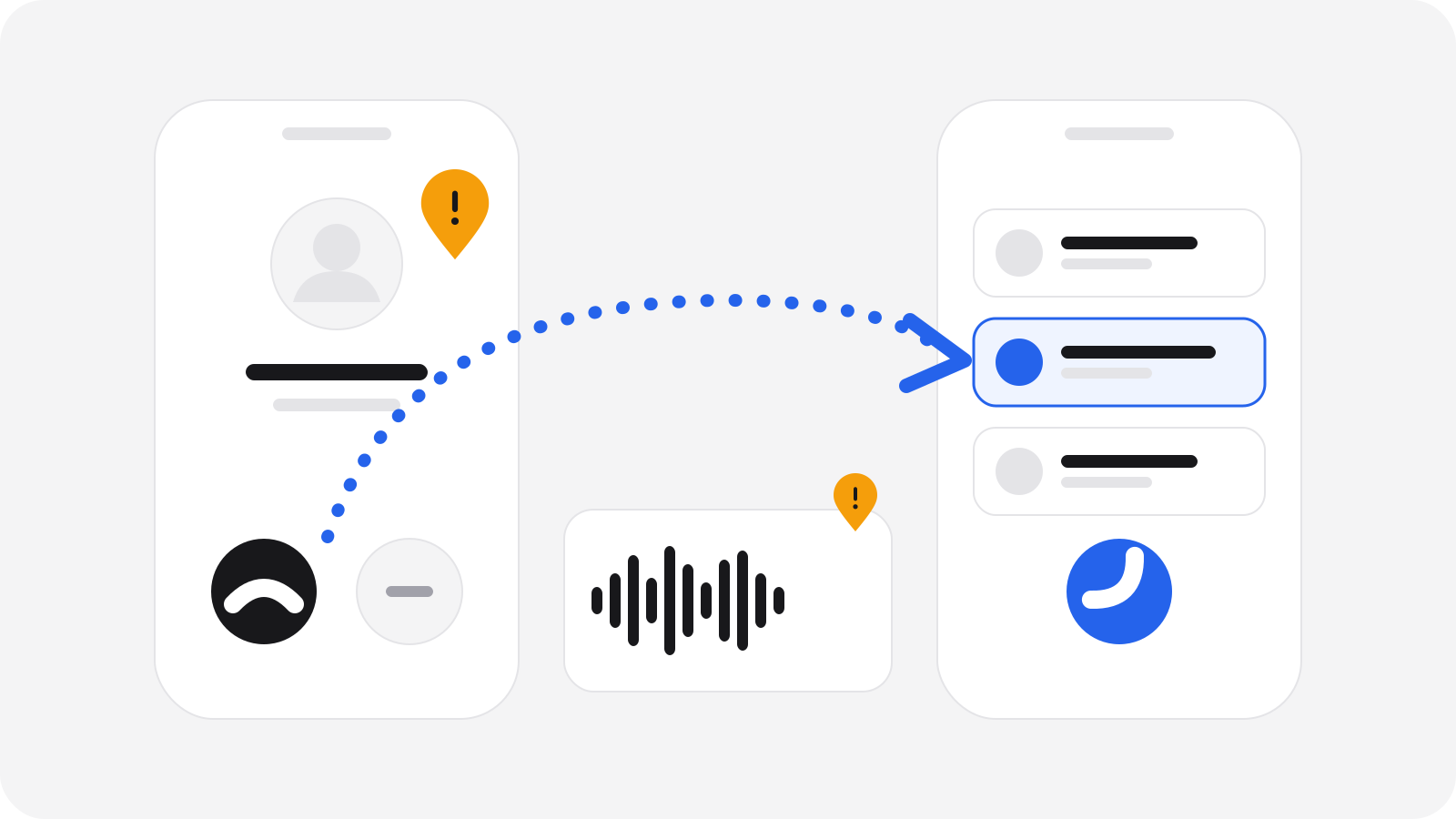
Fake "payment received" emails. You are selling something. A buyer says they have paid, and an email arrives that looks like it comes from the marketplace: "Payment received, please ship now." It is fake. Do not use any link in it. Open the marketplace yourself, in the app or by typing the address, and check whether the money is really there. If it is not, do not send the item.
"Let's pay outside the platform." A seller asks you to pay by bank transfer, "because it is easier" or "to avoid fees". The moment you leave the marketplace, its protection no longer applies, and nobody can step in if the item never comes. Buyers use this too, by sending a link to a payment page that only looks like the marketplace's.
Overpayment and refund tricks. A buyer "accidentally" sends too much and asks you to send the difference back. Later the original payment turns out to be fake or is reversed, and your refund is gone for good. If someone pays more than agreed, do not return anything until you have confirmed in your own bank app that the money is truly yours and cleared.
Pressure and a made-up reason. "I am travelling and a courier will collect it", "I have another buyer, so decide now." Urgency is the common thread. A real buyer or seller can wait while you check.
Which payment methods are safer?
The safest choice is the one that gives someone else a chance to help you if things go wrong.
- Card, or the marketplace's own protected payment. Your bank, card provider or the platform can often look into what happened and sometimes reverse the payment. It is not a guarantee, but it is the best starting point.
- Bank transfer to someone you do not know. The money moves fast and is usually very hard to get back.
- Gift cards. No honest shop or seller asks to be paid with gift card codes. Treat this as a scam signal on its own.
- Crypto. Payments are generally irreversible, and a stranger asking for them should make you stop.
What should you check before you pay?
Run through this list. It takes two minutes and catches most problems.
- Is the price realistic when you compare it with two or three other shops?
- Did you type the address yourself, or did you arrive from an ad or a message? Check the spelling letter by letter.
- Can you find the company's name, postal address and return terms?
- Do independent sources say anything about the shop?
- Is the payment method a card or the platform's protected payment?
- Is anyone rushing you, or asking you to leave the marketplace?
- Would you still go ahead if you waited until tomorrow?
If any answer feels off, stop. A real deal will still be there later. A scam usually needs you to hurry.
What to do if it already happened
First, take a breath. This happens to careful people, and it is not your fault.
- Contact your bank or card provider straight away. Tell them what happened and ask whether they can reverse the payment or block your card. Do it quickly, because time matters.
- If you shared your card details or a password, change the password and ask your bank to replace the card.
- Save the evidence. Keep screenshots of the ad, the shop, messages and receipts. Do not delete the conversation.
- Report it. Contact your local police or your national fraud reporting service. In the UK you can report at Report Fraud (reportfraud.police.uk), and in Scotland you can call Police Scotland on 101. If you received a scam text, you can forward it to 7726.
- Watch for follow-ups. Scammers sometimes come back pretending to help you recover your money for a fee. Do not pay anyone for that.
The short version
Be careful with prices that are too good, pay by card or the platform's own protection, and never leave the marketplace to pay a stranger. When something feels rushed, slow it down and check it yourself.
Scamory is being built to help people and families check suspicious messages and shops before they act.